


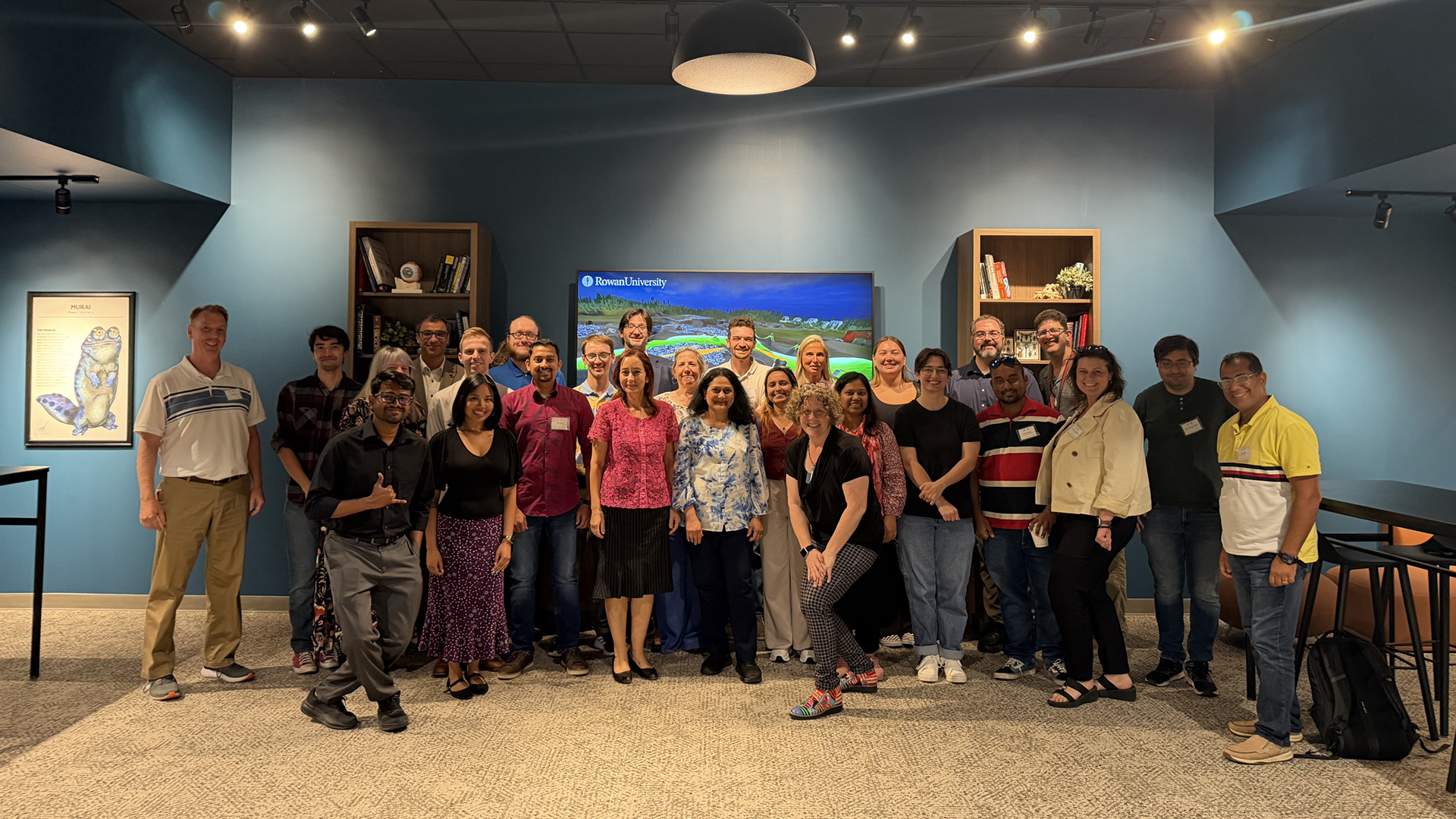
What happens when transportation planning steps into a virtual world?
VTC and NJDOT staff found out during a hands-on visit to Rowan University’s MAVRC Center.
On a recent warm day in July, several Voorhees Transportation Center (VTC) and NJ Department of Transportation (NJDOT) staff spent an afternoon at Rowan University exploring the Machine Learning, Artificial Intelligence (AI), Augmented Reality (AR), and Virtual Reality (VR) capabilities at the MAVRC Center. The visit offered a hands-on experience with systems designed to immerse multiple users in virtual and mixed reality environments and helped us think about how these tools might support transportation safety, planning, and workforce development in New Jersey.
What is immersive technology?
We hear these terms often, so here is a quick refresher:
- AI uses data and algorithms to make predictions or generate content.
- VR places users inside a fully digital environment through a headset.
- AR overlays digital information onto real-world scenes.
- Computer vision allows computers to interpret images and video.
- Digital twins are virtual replicas of real places or systems that can be tested and changed without touching the real world.
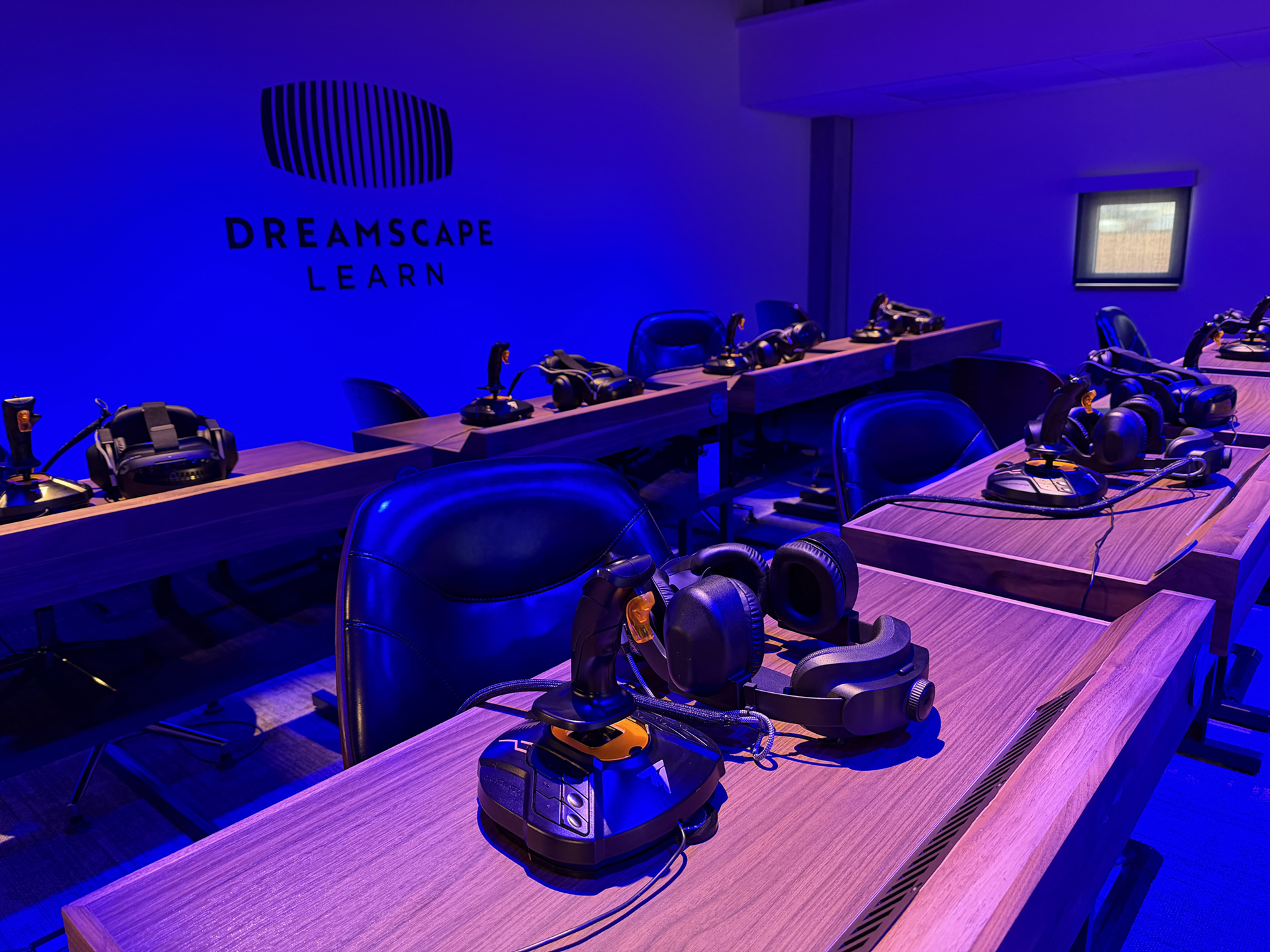
Dreamscape Learn classroom
These concepts are becoming more common in research and practice, but their connection to transportation planning is not always clear. Seeing and physically experiencing the technology helped bridge that gap.
Inside Rowan’s Dreamscape Learn Classroom
The Dreamscape Learn classroom was the highlight of the visit. The setup allowed us to move through 3D environments with sensory elements like wind and chair movement that felt a bit like a theme park ride. It was fun, but it also demonstrated how immersive experiences could support curriculum development and hands-on training for students and professionals.
We also learned about some of Rowan’s transportation-focused research, including the Safety and Monitoring Visualization System, which analyzes potential safety conflicts at intersections and behaviors like seatbelt compliance.
How could planners and researchers use this technology?
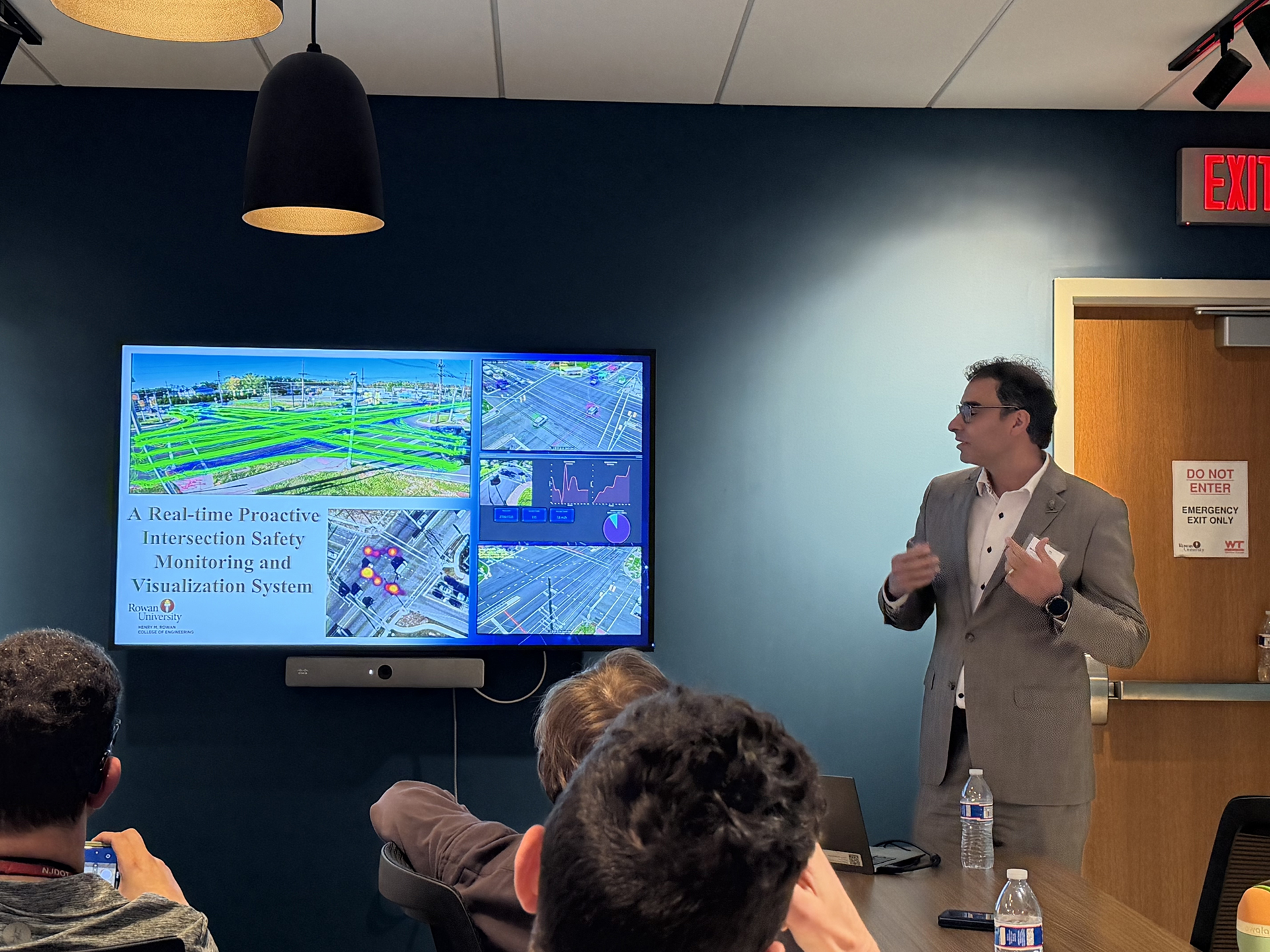
Dr. Mohammad Jalayer, PhD, Associate Director, CREATES, shared information on safety monitoring and visualization.
A few themes stood out:
- Visualization is the strongest near-term opportunity. VR can help people understand street designs, land use changes, transit experiences, and safety countermeasures in ways that traditional renderings cannot.
- Scenario testing shows promise. Complete streets concepts, speed management strategies, and conflict analysis could benefit from controlled virtual environments.
- Training has potential. Ideas ranged from student modules for engineering and planning programs to VR-based instruction for law enforcement on crash investigation. A pilot curriculum for transportation professionals could be valuable, though it will require more discussion about cost and alignment.
What are the drawbacks?
Synthetic data, bias, and AI hallucinations require careful evaluation before these tools are used for decision-making. Immersive platforms rely on large datasets and automated interpretation, and if the underlying data are incomplete, inaccurate, or unrepresentative, the virtual environment can reinforce the same problems we see in the real world. AI systems can also generate confident but incorrect outputs, which could mislead users if not checked against real research and evidence. Before applying these tools to transportation planning or safety analysis, agencies need to understand how the data are built, how the models behave, and where human review is essential.
Technology is also expensive and requires ongoing maintenance. It is worth asking whether the cost outweighs the usefulness and whether the technology solves a real problem or simply exists because it is available.
Moving forward
Even with these cautions, the visit highlighted real opportunities. MAVRC’s capabilities could support public engagement, online training, and future grant collaborations. A partnership roadmap would likely begin with small pilots that test specific use cases in controlled virtual environments before expanding to broader applications.
The afternoon at Rowan sparked thoughtful discussion about how emerging technology can support transportation safety and planning. With continued dialogue and clear alignment to agency needs, there is room for meaningful collaboration ahead.
Thank you!
Thank you to our Rowan hosts for the demonstration and for welcoming VTC and NJDOT staff: Dr. Nidhal Bouaynaya, PhD, Director, MAVRC; Dr. George Lecakes, PhD, Director of Immersive Technology and Learning, Amanda Almon, Biomedical Art and Visualization; Dr. Gina Tang, PhD, Electrical and Computer Engineering; Dr. Mohammad Jalayer, PhD, Associate Director, CREATES; Garrett Williams, Immersive Experience Developer & Operations Assistant, Dreamscape Learn; Leeza Duller, Immersive Experience Developer, Dreamscape Learn; and Ryan Hare, PhD student.