


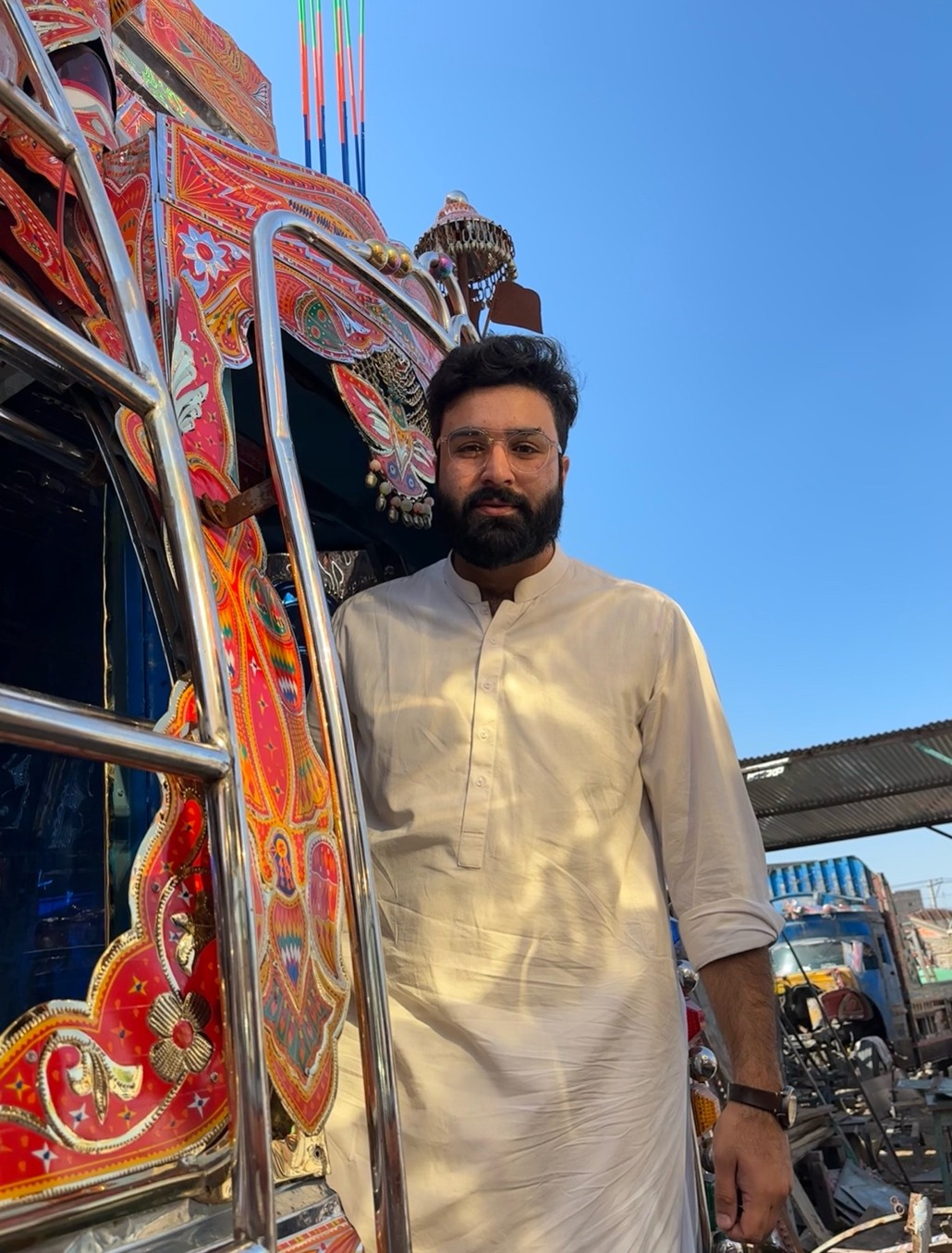
In Pakistan, and among the global Pakistani diaspora, truck art has become a symbol of national identity. Yet while truck art-inspired art and decor continue to gain popularity, the tradition itself is disappearing. In a new video and paper, Shahan Ahmed, a Bloustein School PhD student, explores how truck art has been affected by the commodification of the tradition and the modernization of Peshawar’s transit system.
The origins of truck art can be traced back several centuries to the elaborately decorated royal chariots of the Mughal era. Over time, these decorative practices were adopted by others, who adorned their wooden carts and draft animals. With the advent of motorized vehicles, the tradition shifted to buses and freight trucks.
These decorated buses became integral to Peshawar’s visual landscape and commuters’ experience with public transport. Historically, public transit in Peshawar was informal, consisting of numerous small, independent bus operators who used truck art to distinguish their vehicles. Today, the city has standardized public transportation through a new bus rapid transit (BRT) system. In the process, Peshawar’s informal buses, and their distinctive artwork, have largely been replaced by a fleet of identical buses. While this transition reflects the city’s push towards modernity, it has come at the expense of a traditional art form.
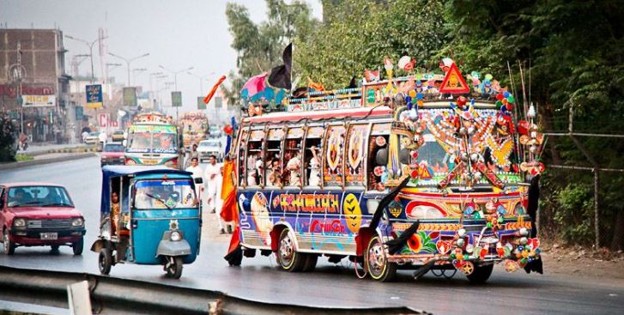
Truck art on an informal bus in Peshawar. Courtesy of Mashriq TV
Shahan interviewed truck artists in Peshawar, who shared that truck art is increasingly moving from the public sphere to the private realm. With fewer public buses available for decoration, artists have shifted toward private commissions. Wealthy Pakistanis now commission buses as display pieces rather than as transportation. Government agencies also use them for heritage tourism, offering foreign visitors a more “authentic” experience of Pakistan. Meanwhile, truck art-inspired clothing, accessories, and home decor have become widely available.
At the same time, the decline of truck art on buses in Peshawar is weakening its connection to the region and diluting distinctive characteristics of the local style. As artists receive a growing number of commissions from cities across Pakistan and from Pakistanis living abroad, the work produced in Peshawar is increasingly shaped by influences and demand from beyond the region. For now, the informal bus system and truck art remain present in the rural area surrounding Peshawar. Within the city, however, truck art has largely disappeared.
The future of truck art remains uncertain. Artists continue to decorate freight trucks, though they note that these designs are generally less elaborate and less personal than those created for buses. Many believe there is a place for truck art within the new BRT system if government officials choose to incorporate it. Others argue that decorating BRT vehicles would limit their creative freedom, requiring them to follow standardized, government-approved designs.
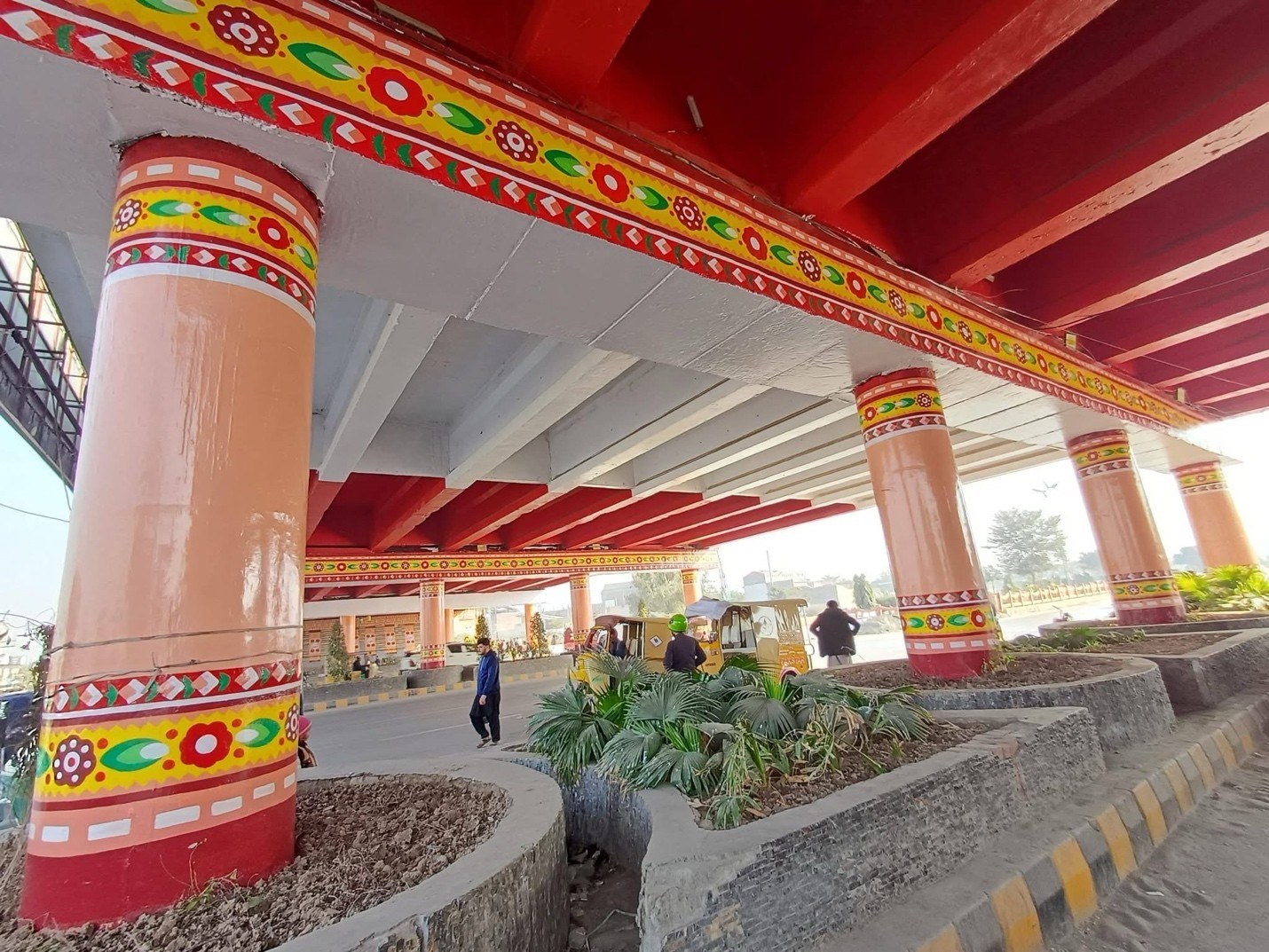
A truck art-style mural decorates an underpass in Peshawar. Courtesy of the Peshawar Development Authority
Although truck art is no longer a common sight on Peshawar’s buses, efforts are underway to bring it back into the public realm. The government has recently commissioned truck-art style murals for walls and underpasses in the city. While different from its traditional form, these projects help reintroduce the aesthetic to Peshawar’s streetscape.
Folk traditions are often viewed as being in tension with the pursuit of modernity. The removal of folk art from the public realm can be part of a broader effort create a more standardized and modern urban environment. This shift has implications beyond the art itself. If local traditions are excluded from the new BRT system, what does this mean for Peshawaris and their sense of cultural identity?
Read Shahan’s paper here and view his short documentary here.