


Crossing Guard Train-the-Trainer program provides municipal supervisors with comprehensive, uniform training to enhance the safety and effectiveness of local crossing guards.
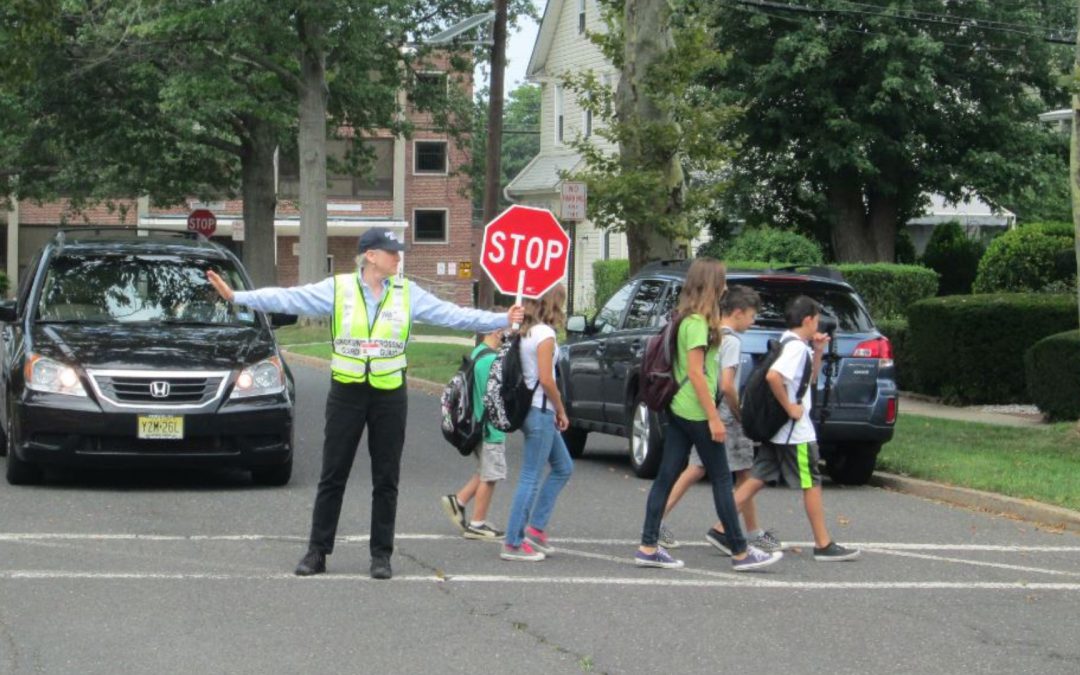
Crossing Guard Train-the-Trainer program provides municipal supervisors with comprehensive, uniform training to enhance the safety and effectiveness of local crossing guards.

Watch VTC Executive Director Leigh Ann Von Hagen present “Getting There Matters: How Active Transportation Creates Connected Communities for Families” at a recent Lunch & Learn webinar with Advocates for Children of New Jersey.
Robert Noland and Lewis Fulton explore ways to reduce oil consumption amidst one of the most severe oil supply disruption in modern history, triggered by the U.S.–Israeli war with Iran and the near‑closure of the Strait of Hormuz.
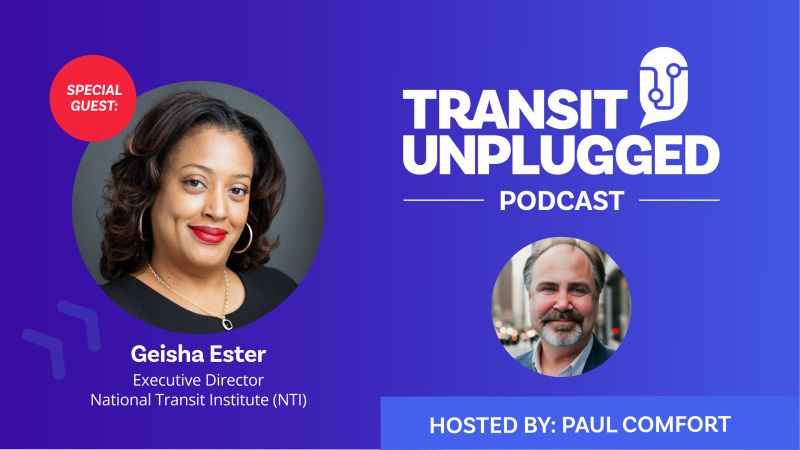
In a recent episode of Transit Unplugged, NTI Executive Director Geisha Ester discusses how the National Transit Institute at VTC is shaping the next generation of transit leaders through no-cost, high-impact training and strategic workforce development.
VTC staff will participate in the 2026 New Jersey Planning & Redevelopment Conference, sharing insights from current research and initiatives focused on transportation access and planning for sustainable growth.
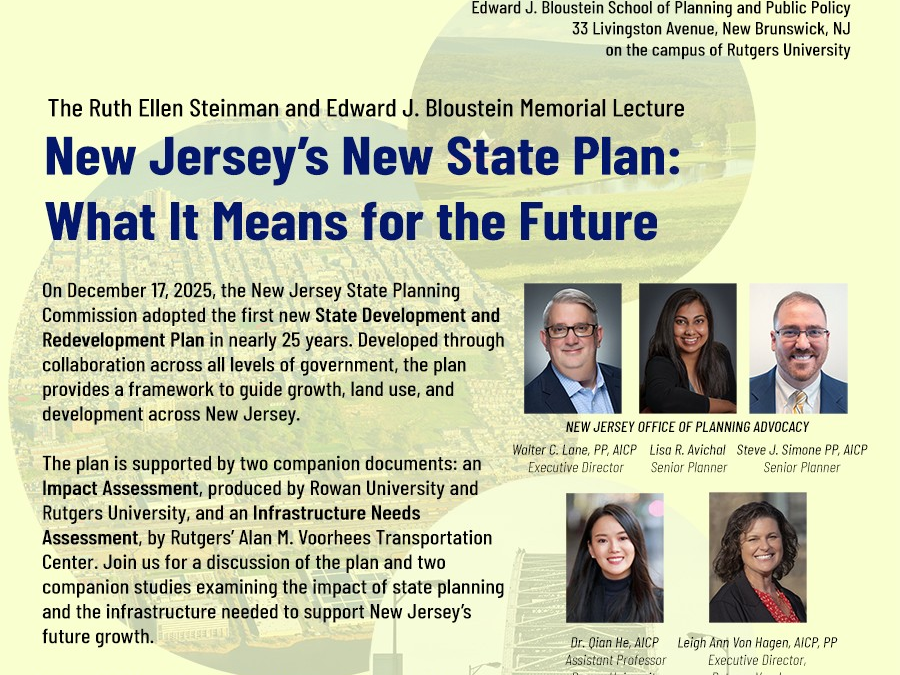
Join the Bloustein School on April 22 for a deep dive into New Jersey’s first new State Development and Redevelopment Plan in 25 years, featuring an expert panel and new impact studies from Rutgers and Rowan Universities.
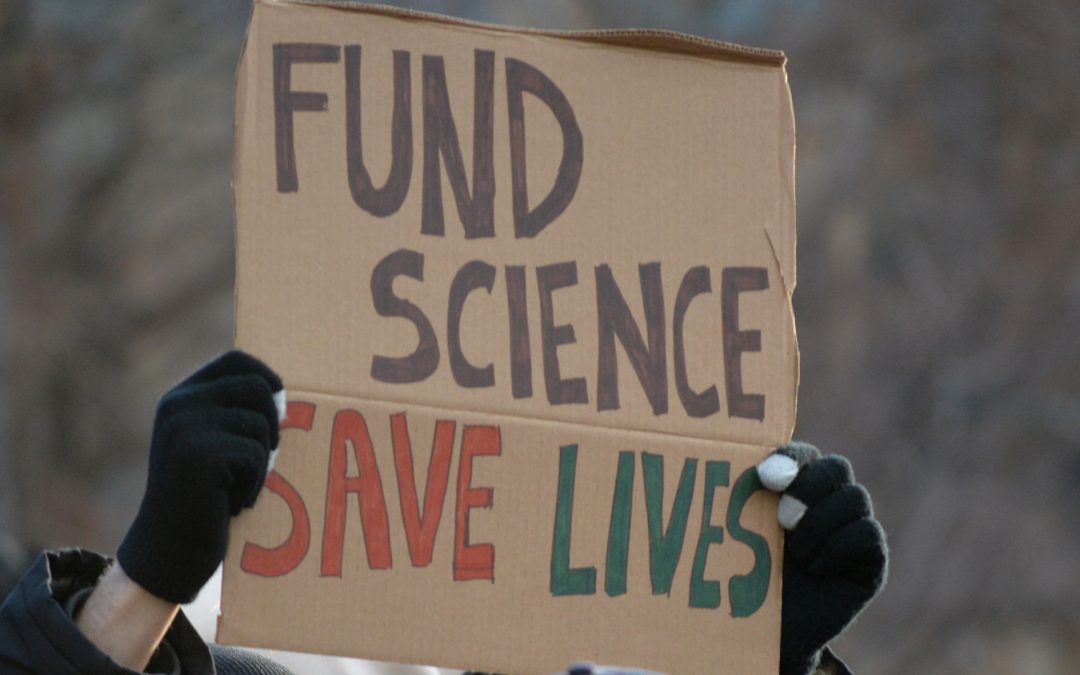
VTC Director Robert Noland discusses the challenges facing scientists and the impact of political decisions on research.

Join NJTIP @ Rutgers and The Bright Side Family on Tuesday, April 28, from 12–1 PM to learn how to transform survey data into actionable program improvements and new funding.
Register now! Learn about the best practices and resources that you can use to increase safety and accessibility in your community.

In a new editorial, VTC Director Robert Noland, PhD, reflects on how transportation and environmental research has evolved over the past three decades, highlighting major findings and persistent gaps between research and policy. His perspective underscores why evidence-based planning remains essential to transportation decision-making.
Recent advances in biometric sensing technologies, such as eye tracking, heart rate trackers, and galvanic skin response (GSR) sensors, offer new opportunities to measure pedestrian stress level and their travel experiences in real-time. Uncertainty remains about...
Background Increasing evidence positively links greenspace and physical activity (PA). However, most studies use measures of greenspace, such as satellite-based vegetation indices around the residence, which fail to capture ground-level views and day-to-day dynamic...
Induced travel elasticities associated with new road capacity are typically estimated for roads of higher functional classifications, such as interstate freeways and principal arterials. These are estimated as “own” elasticities, that is an increase in lane kilometers...
There is a growing perception that e-scooters are more dangerous than bicycles and e-bikes, with towns implementing measures to ban their usage. Yet, there is not much evidence from large scale surveys to substantiate this claim. Nearly 14,000 micromobility injuries...