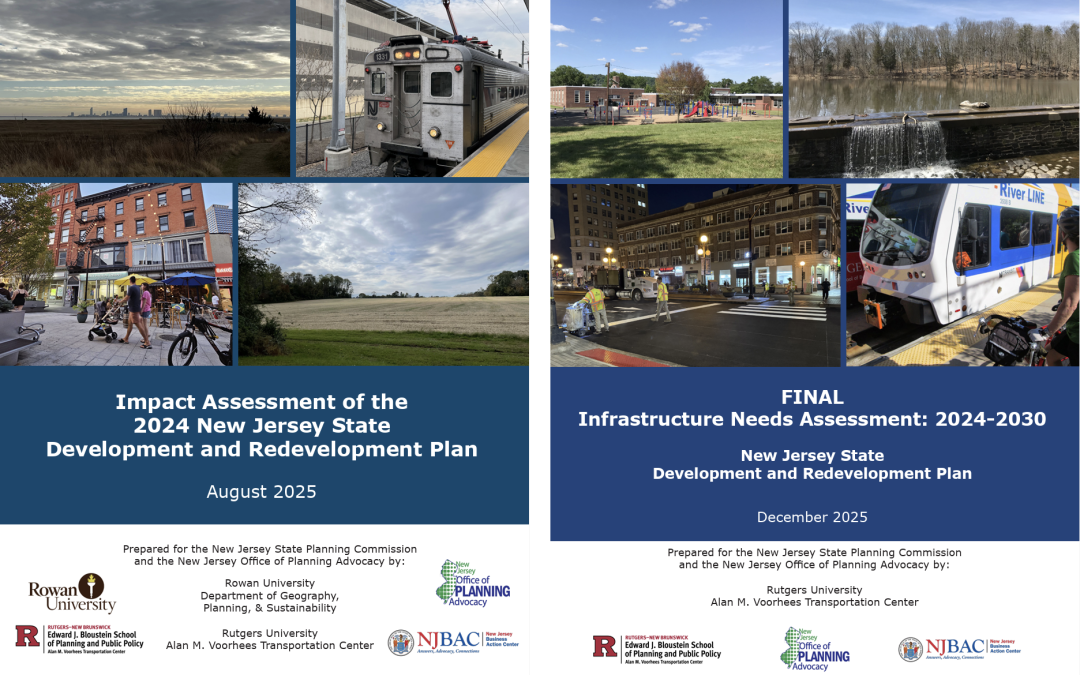
The New Jersey State Planning Commission has adopted an updated State Plan, along with a new Impact Assessment and Infrastructure Needs Assessment, marking the first comprehensive update since 2001. The Plan will guide coordinated state and local decision-making on land use, transportation, housing, infrastructure, and climate adaptation.
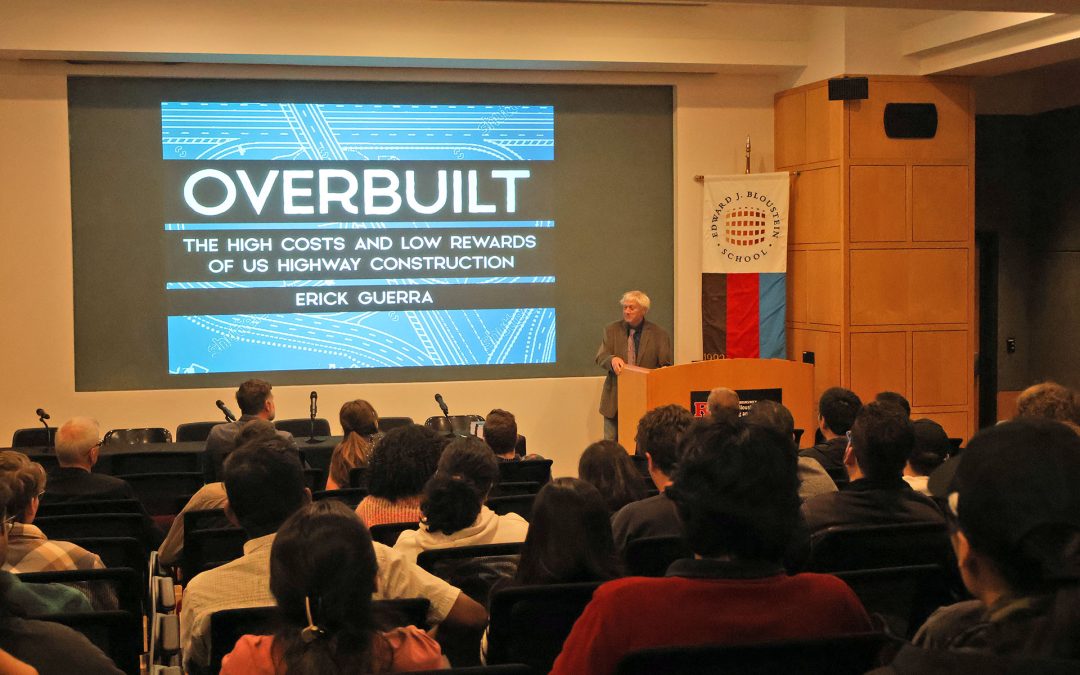
At the VTC Distinguished Lecture, Dr. Erick Guerra challenged the audience to look beyond the nation’s overbuilt highway system and consider how cities can rebuild to reconnect communities and expand access.
In September, VTC staff gathered to update our 2026–2031 Strategic Plan, reflecting on our strengths, expertise, and opportunities for growth. The retreat strengthened collaboration and shaped a shared vision for tackling transportation challenges with research, innovation, and community-focused solutions.
VTC joined the New Jersey State Policy Lab and other Rutgers researchers in offering research-backed strategies to support transportation, housing, and infrastructure improvements under New Jersey’s new administration.
As e-bikes and other micromobility devices grow in popularity, it’s essential for young riders and their guardians to understand how to use them safely. These devices offer a fun, healthy, and eco-friendly alternative to driving. The following guidance can help families and communities stay safe while sharing the road.
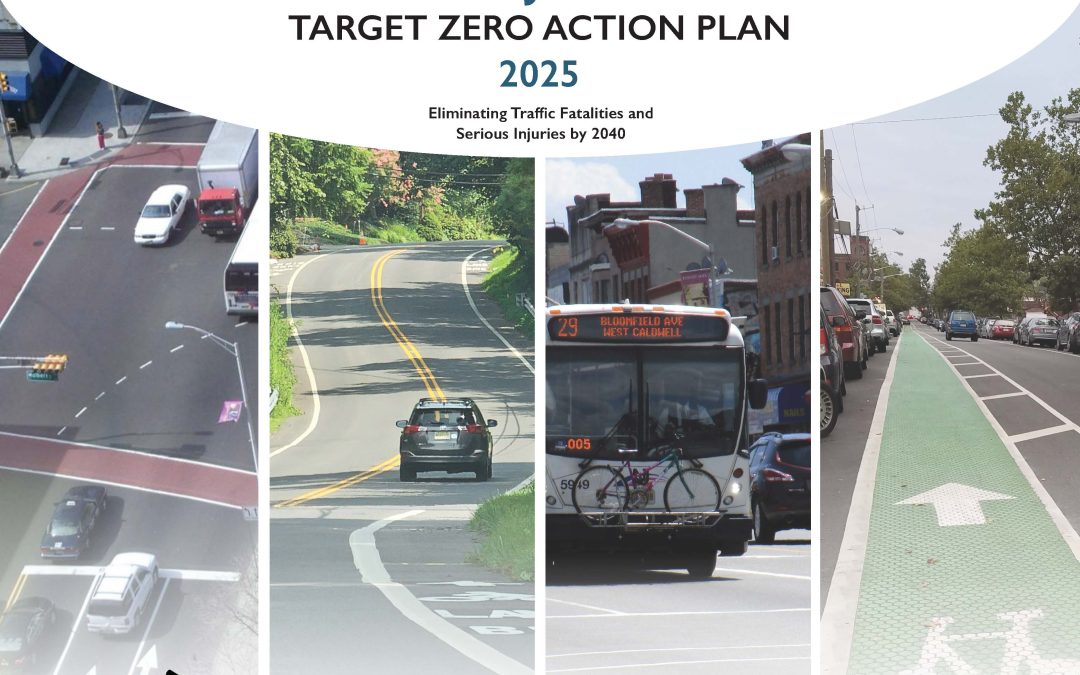
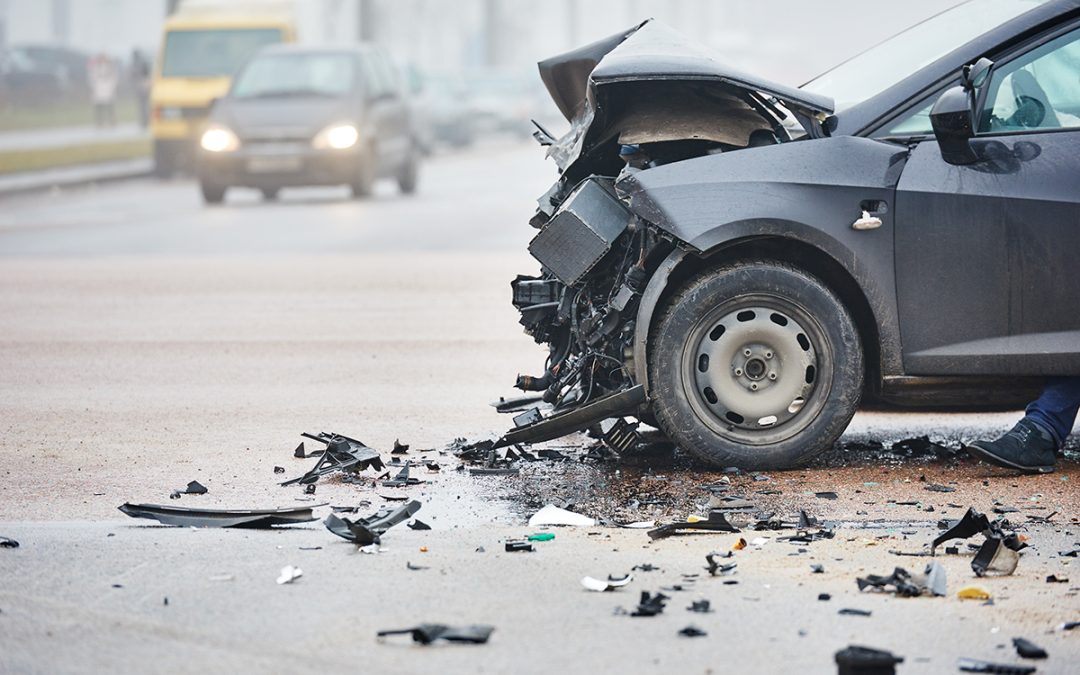
A new VTC-authored report examines how states share crash data and highlights best practices—such as public dashboards—that can help New Jersey improve safety and transparency.
Curious about how walking, biking, and micromobility are reshaping our streets and cities? Join us for a screening of the Association of Pedestrian & Bicycle Professionals’ Virtual Summit!
This even, hosted by NJTOD and NJ TRANSIT’s Transit Friendly Planning (TFP) Program will bring together developers, municipal leaders, and experts to share real-world strategies on how vacant lots, brownfields, and underused parcels can become walkable, vibrant neighborhoods near transit.
Trail networks enhance community well-being, providing accessible options for walking, biking, and rolling while promoting sustainability and economic vitality. In New Jersey, investing in trails and shared-use paths supports mobility, safety, and environmental goals,...
This report examines the relationships between the characteristics of transit-oriented development (TOD) and (1) the use of transit and non-motorized modes (walking, cycling, scooting) and (2) local shopping behaviors and behavioral changes during and after the...
From labor-saving inspection drones to safety-enhancing techniques for bridge repair and preservation, a multipronged New Jersey Department of Transportation technology transfer initiative is helping to advance innovation throughout the agency and state. The goal:...
With improved portability and affordability, eye tracking devices have facilitated an expanding range of cycling experiments aimed at understanding cycling behavior and potential risks. Given the complexity of cyclists’ visual behavior and gaze measurements, we...