An effort to benchmark the current state of travel by a unique set of travelers, transit riders who travel to stations by bicycle.



An effort to benchmark the current state of travel by a unique set of travelers, transit riders who travel to stations by bicycle.
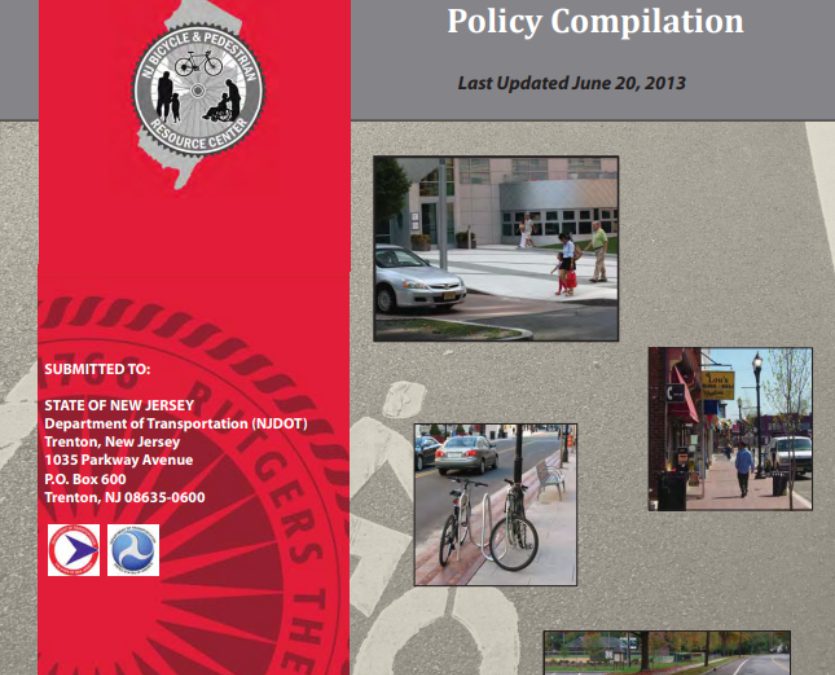
The NJ Bicycle and Pedestrian Resource Center has compiled all State, County and Municipal policies into one comprehensive document as a resource for other county and municipal officials.
We report on an analysis of carbon emissions from commuting to a large multi-campus university system, Rutgers, the State University of New Jersey. This is derived from a campus survey to assess carbon emissions and various attitudes towards sustainability across a...
Women and sexual and gender minorities (SGMs) have unique transportation experiences and needs, including public transit services. However, there is a gap in the data that documents their experiences and needs. This paper aims to add to existing research by examining...
Since its creation in 1979, NJ TRANSIT has grown into the geographically largest public transit system in the United States. Over more than four decades, the agency’s financial structure has shifted in response to changing state and federal priorities—shaping service...
Harassment, discrimination, and violence are major concerns for women and sexual and gender minorities (SGMs) who ride public transit. However, these experiences often go underreported, and agencies may not be aware of the extent of harassment within their services....