


Trip deprivation can legitimately reflect both functioning and capability when deprivation is carefully defined.
Trip deprivation can legitimately reflect both functioning and capability when deprivation is carefully defined.
Using data from a statewide random-digit-dialing telephone survey of 1,001 adults, this paper examines how New Jersey residents perceive the safety impact of AVs on pedestrians, bicyclists, and people with ambulatory disability.
This article explores three concepts of justice in transportation: environmental justice (EJ), transport justice (TJ), and mobility justice (MJ).
This study examines transit mode choice preferences of New Jersey commuters traveling to New York City with the objective of assisting trans-Hudson ferry service planning on the basis of variables significantly affecting mode choice.
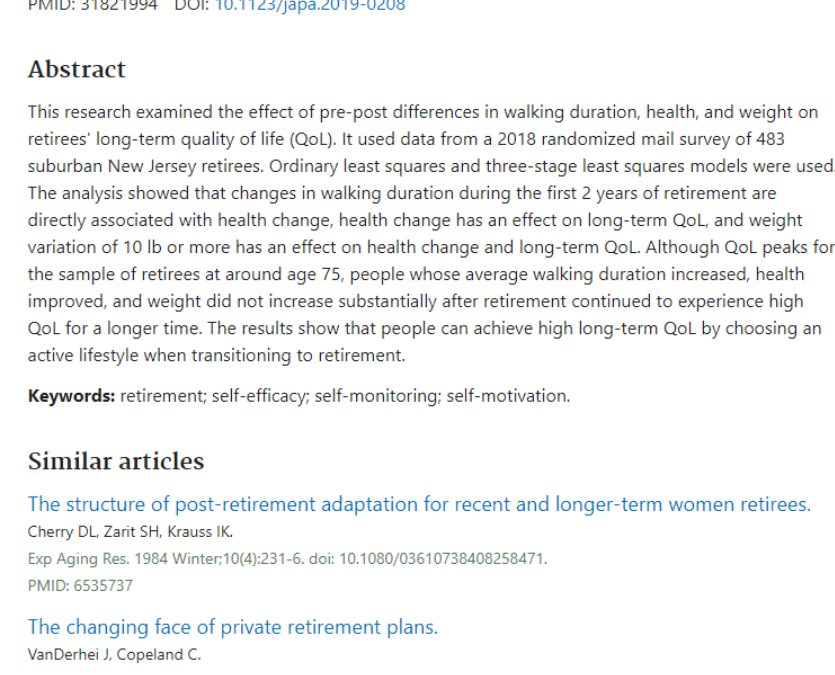
This research examined the effect of pre-post differences in walking duration, health, and weight on retirees’ long-term quality of life (QoL).
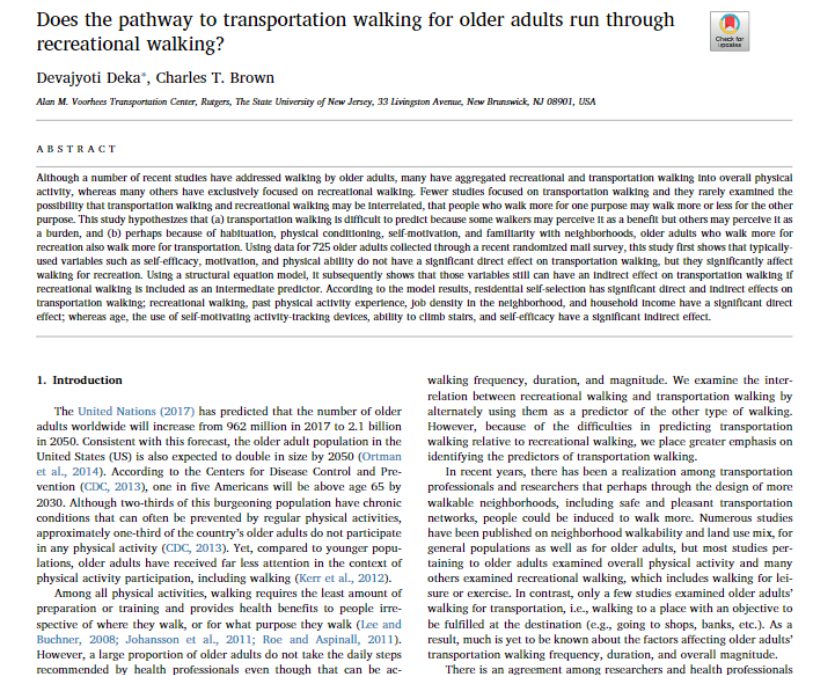
Although a number of recent studies have addressed walking by older adults, many have aggregated recreational and transportation walking into overall physical activity, whereas many others have exclusively focused on recreational walking.
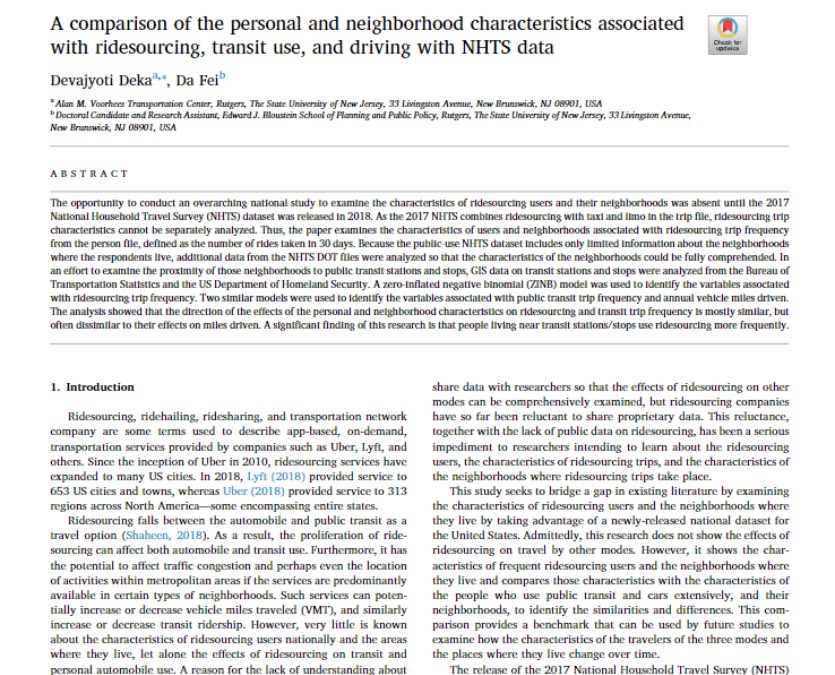
The opportunity to conduct an overarching national study to examine the characteristics of ridesourcing users and their neighborhoods was absent until the 2017 National Household Travel Survey (NHTS) dataset was released in 2018.
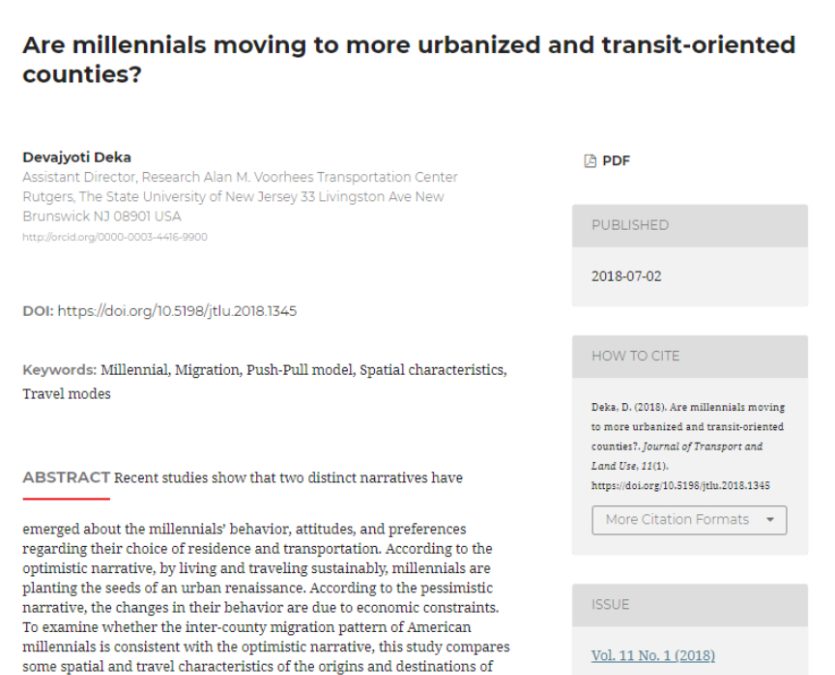
Recent studies show that two distinct narratives have emerged about the millennials’ behavior, attitudes, and preferences regarding their choice of residence and transportation.
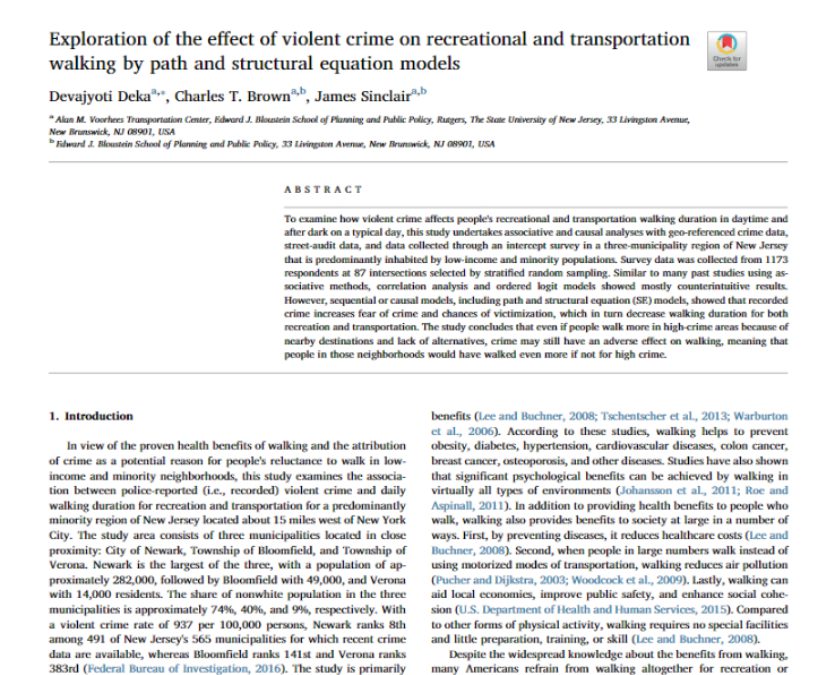
To examine how violent crime affects people’s recreational and transportation walking duration in daytime and after dark on a typical day.
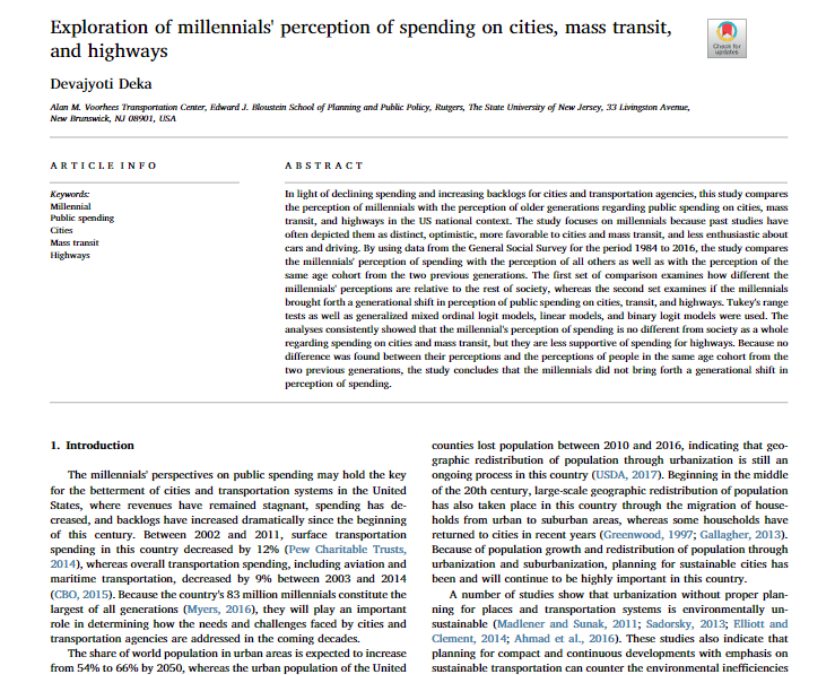
This study compares the perception of millennials with the perception of older generations regarding public spending on cities, mass transit, and highways in the US national context.
Transportation researchers rarely publish findings from qualitative methods in peer-reviewed transportation journals; quantitative methods dominate research in the field. In this article, we document the paucity of qualitative research in transportation journals and...
Virtual public involvement (VPI), defined by the Federal Highway Administration as “the use of digital technology to engage individuals or to visualize projects or plans,” is now an essential part of public participation in transportation planning and project...
We report on an analysis of carbon emissions from commuting to a large multi-campus university system, Rutgers, the State University of New Jersey. This is derived from a campus survey to assess carbon emissions and various attitudes towards sustainability across a...
Women and sexual and gender minorities (SGMs) have unique transportation experiences and needs, including public transit services. However, there is a gap in the data that documents their experiences and needs. This paper aims to add to existing research by examining...