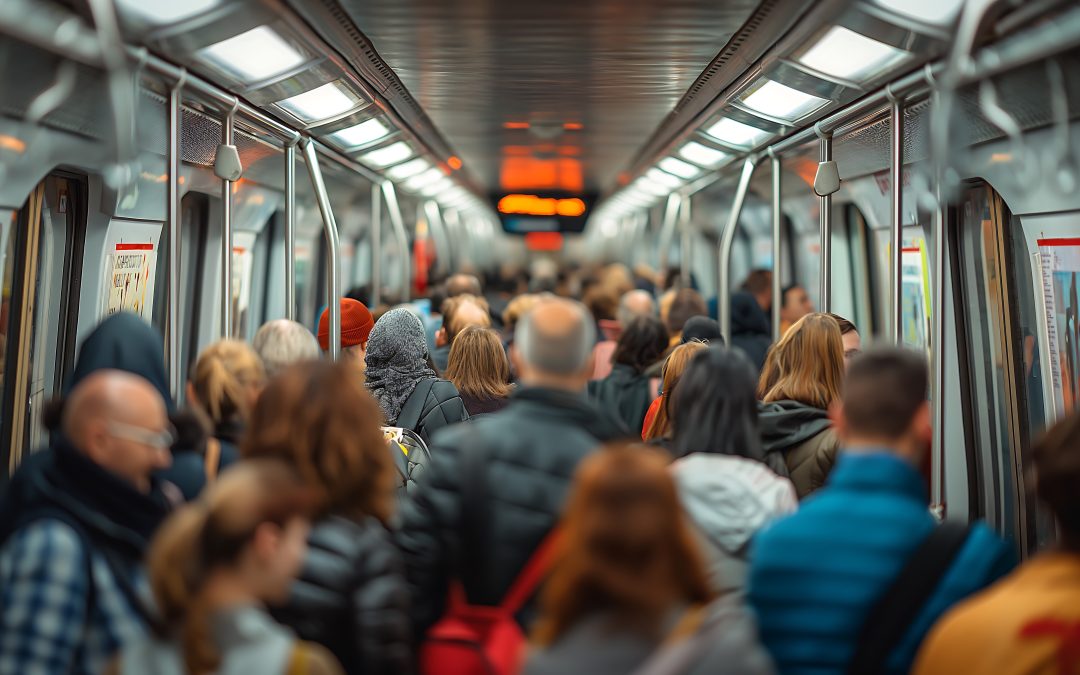
Women and sexual and gender minorities (SGMs) have unique transportation experiences and needs, including public transit services. However, there is a gap in the data that documents their experiences and needs. This paper aims to add to existing research by examining the transit needs and experiences of women and SGMs, which include, but are not limited to, individuals who identify as lesbian, gay, bisexual, asexual, transgender, Two-Spirit, queer, intersex, or gender nonconforming.
Over 7,500 public transit users in New Jersey, U.S., were surveyed to gather feedback on their public transit experiences and safety concerns. We analyzed concerns for safety, experiences of harassment and assault, and perceptions of safety with regard to police, security cameras, and public transit employees.
This study examined how women and sexual and gender minorities (SGMs) travel on NJ TRANSIT, finding that these groups, particularly transgender and gender non-conforming riders, face distinct travel behaviors, heightened safety and harassment concerns, and underreporting of incidents, highlighting the need for targeted agency accommodations and policies.
The NJDOT Bicycle and Pedestrian Resource Center’s newly released New Jersey Micromobility Guide summarizes state laws and best practices for safely riding, charging, and storing micromobility devices in New Jersey.
Transportation researchers rarely publish findings from qualitative methods in peer-reviewed transportation journals; quantitative methods dominate research in the field. In this article, we document the paucity of qualitative research in transportation journals and...
Virtual public involvement (VPI), defined by the Federal Highway Administration as “the use of digital technology to engage individuals or to visualize projects or plans,” is now an essential part of public participation in transportation planning and project...
We report on an analysis of carbon emissions from commuting to a large multi-campus university system, Rutgers, the State University of New Jersey. This is derived from a campus survey to assess carbon emissions and various attitudes towards sustainability across a...
Women and sexual and gender minorities (SGMs) have unique transportation experiences and needs, including public transit services. However, there is a gap in the data that documents their experiences and needs. This paper aims to add to existing research by examining...