In a new editorial, VTC Director Robert Noland, PhD, reflects on how transportation and environmental research has evolved over the past three decades, highlighting major findings and persistent gaps between research and policy. His perspective underscores why evidence-based planning remains essential to transportation decision-making.
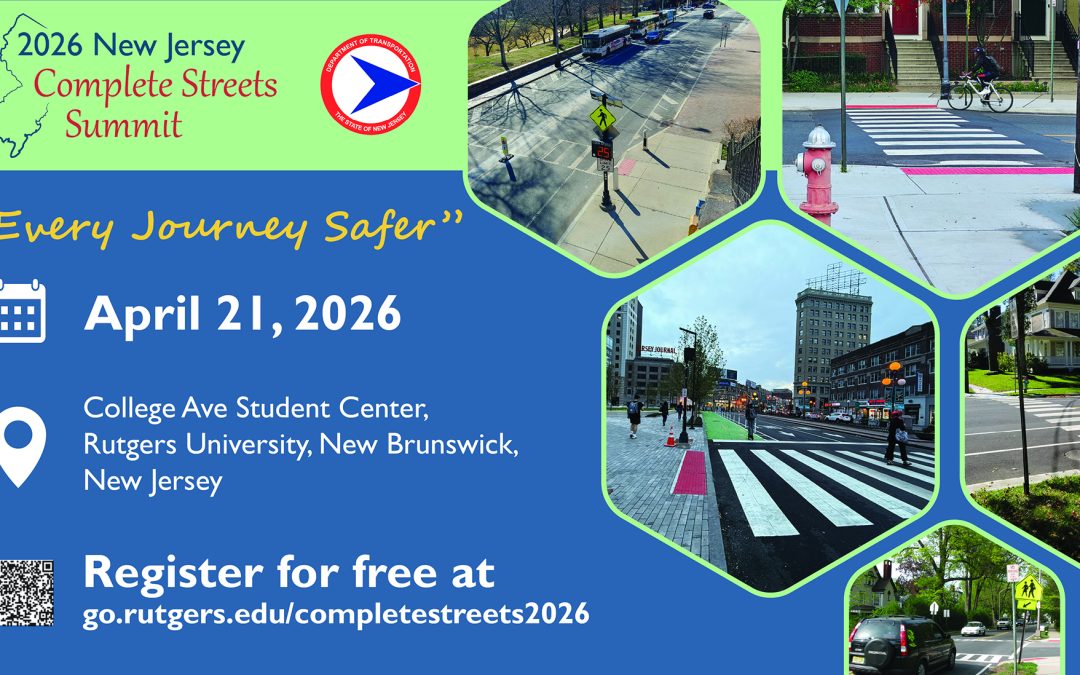
Registration is now open for the 2026 New Jersey Complete Streets Summit! Join the NJDOT and transportation leaders as we work toward making every journey safer across the state.
Convened by the Transportation Research Board (TRB), the 2026 TRB Annual Meeting was held January 11–15, 2026, in Washington, D.C., at the Walter E....
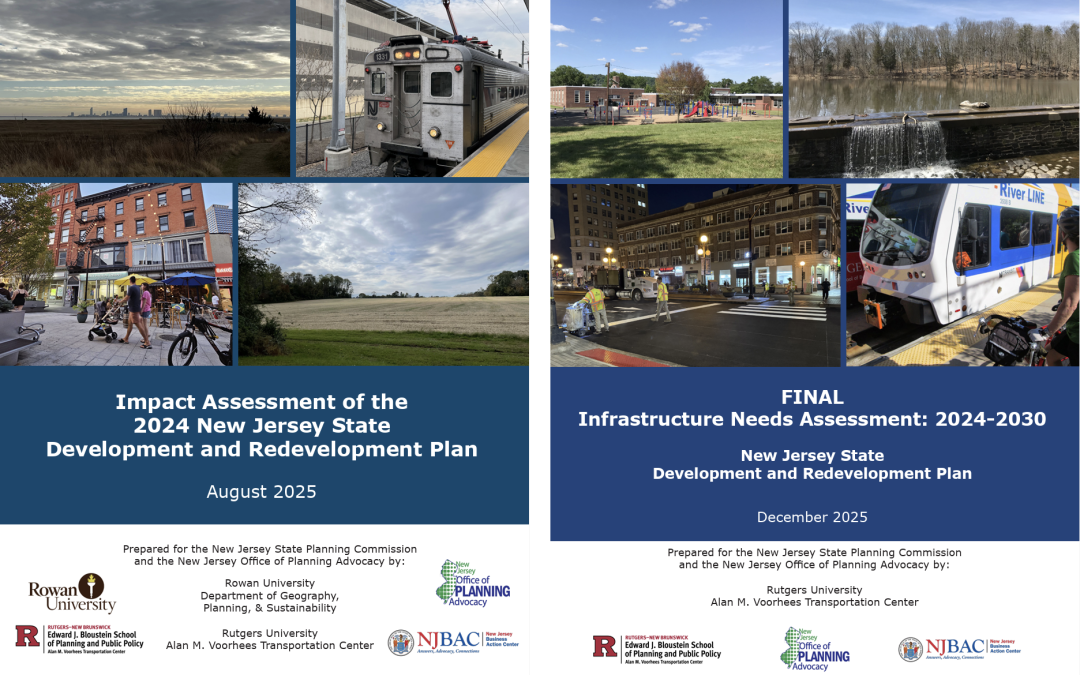
The New Jersey State Planning Commission has adopted an updated State Plan, along with a new Impact Assessment and Infrastructure Needs Assessment, marking the first comprehensive update since 2001. The Plan will guide coordinated state and local decision-making on land use, transportation, housing, infrastructure, and climate adaptation.
With support from the New Jersey Department of Environmental Protection’s Resilient NJ Municipal Assistance Program, the Environmental Analysis & Communications Group and VTC-POET will work with several NJ municipalities to develop locally specific Climate Change-Related Hazard Vulnerability Assessments (CCRHVAs).
A “big limitation” of the research was that it approximated where residents’ jobs were located, Noland said, but it helps to demonstrate the skyrocketing impacts as seas continue to rise. The researchers developed a measure of job accessibility and looked at how it would be reduced throughout the two-county area as water levels continue to rise.
Transportation researchers rarely publish findings from qualitative methods in peer-reviewed transportation journals; quantitative methods dominate research in the field. In this article, we document the paucity of qualitative research in transportation journals and...
Virtual public involvement (VPI), defined by the Federal Highway Administration as “the use of digital technology to engage individuals or to visualize projects or plans,” is now an essential part of public participation in transportation planning and project...
We report on an analysis of carbon emissions from commuting to a large multi-campus university system, Rutgers, the State University of New Jersey. This is derived from a campus survey to assess carbon emissions and various attitudes towards sustainability across a...
Women and sexual and gender minorities (SGMs) have unique transportation experiences and needs, including public transit services. However, there is a gap in the data that documents their experiences and needs. This paper aims to add to existing research by examining...