


City Cycling offers a guide to this urban cycling renaissance, with the goal of promoting cycling as sustainable urban transportation available to everyone.
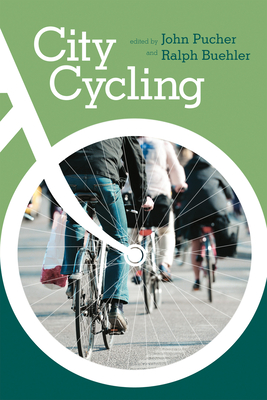
City Cycling offers a guide to this urban cycling renaissance, with the goal of promoting cycling as sustainable urban transportation available to everyone.
This paper provides a broad overview of the role walking and cycling can play in making our cities healthier.
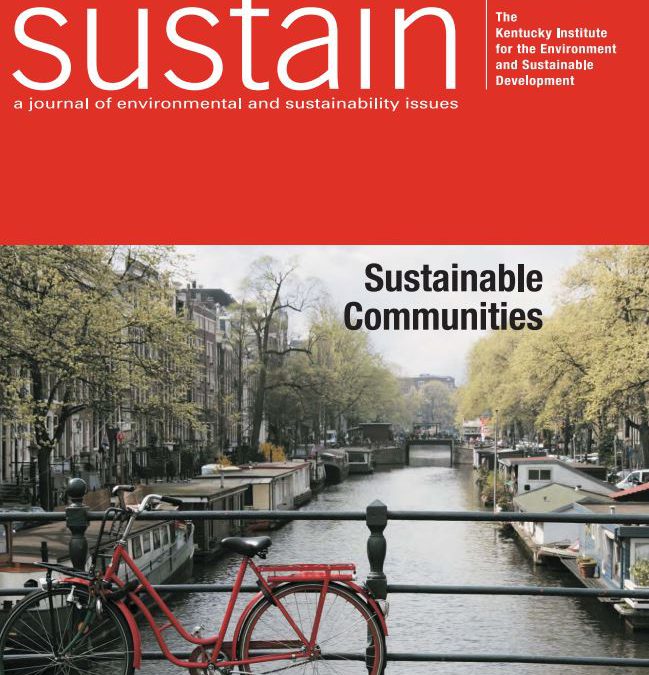
This article examines how Amsterdam has consistently improved cycling conditions over many decades and succeeded at raising even further the share of trips by bike.
Cycling safety has improved, with steady or declining numbers of cyclist injuries and fatalities in spite of rapidly rising cycling volumes. Some serious deficiencies remain, however
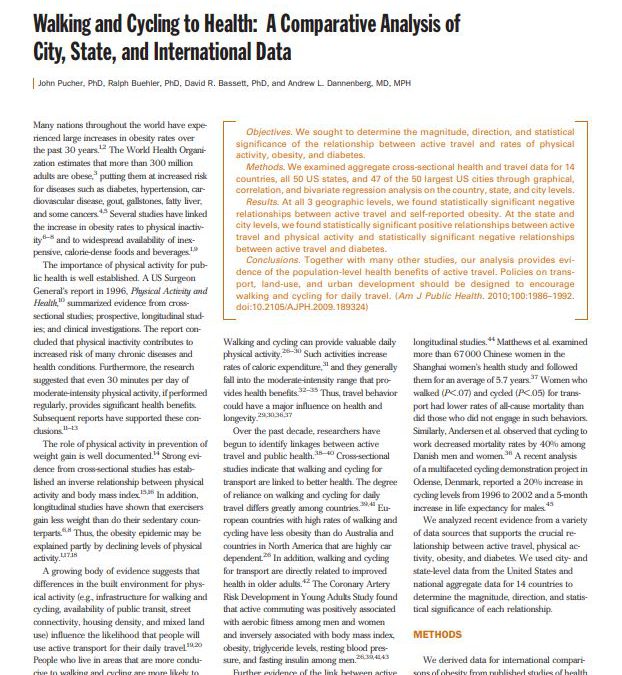
Together with many other studies, our analysis provides evidence of the population-level health benefits of active travel. Policies on transport, land-use, and urban development should be designed to encourage walking and cycling for daily travel.
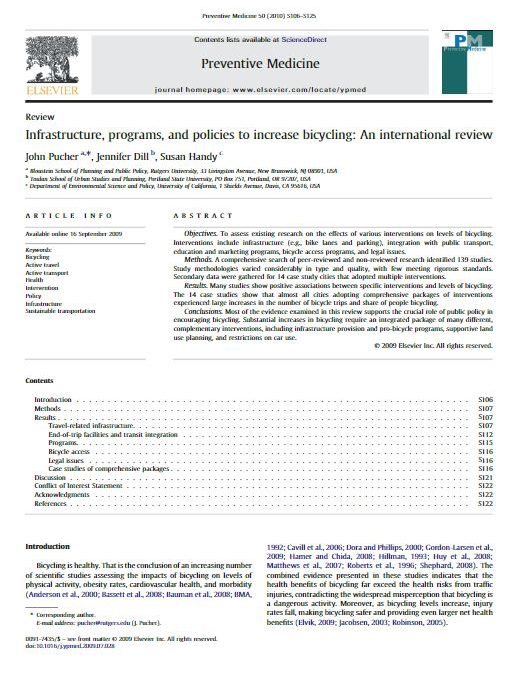
The 14 case studies show that almost all cities adopting comprehensive packages of interventions experienced large increases in the number of bicycle trips and share of people bicycling.
Transportation researchers rarely publish findings from qualitative methods in peer-reviewed transportation journals; quantitative methods dominate research in the field. In this article, we document the paucity of qualitative research in transportation journals and...
Virtual public involvement (VPI), defined by the Federal Highway Administration as “the use of digital technology to engage individuals or to visualize projects or plans,” is now an essential part of public participation in transportation planning and project...
We report on an analysis of carbon emissions from commuting to a large multi-campus university system, Rutgers, the State University of New Jersey. This is derived from a campus survey to assess carbon emissions and various attitudes towards sustainability across a...
Women and sexual and gender minorities (SGMs) have unique transportation experiences and needs, including public transit services. However, there is a gap in the data that documents their experiences and needs. This paper aims to add to existing research by examining...