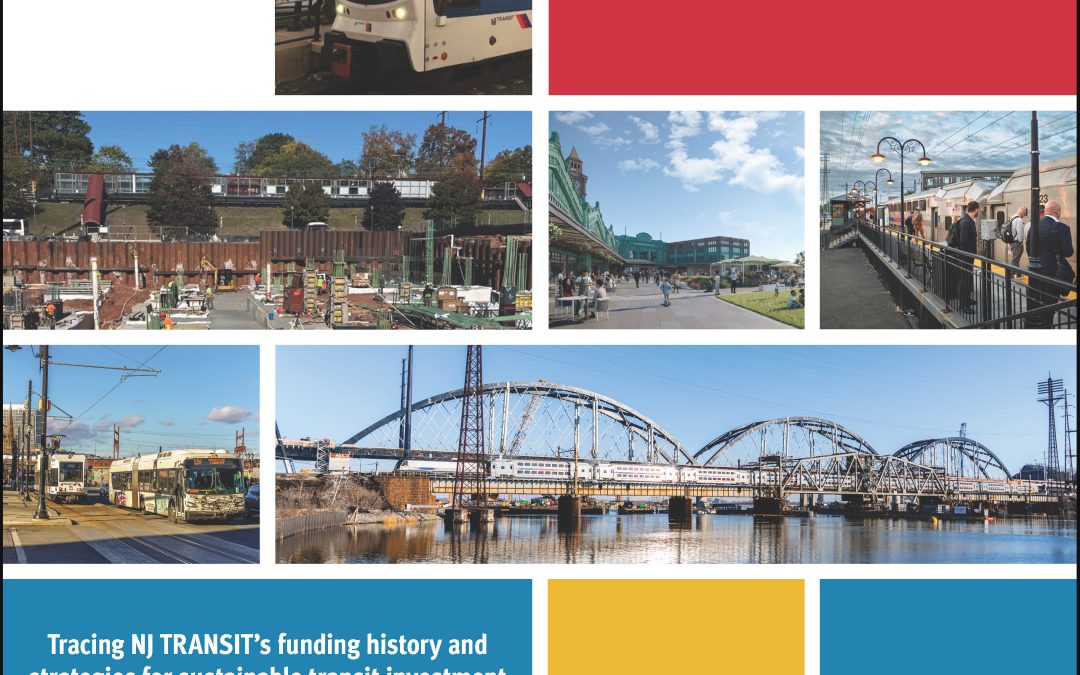
Researchers Matt Bond and Stephanie DiPetrillo trace NJ TRANSIT’s financial history from 1979 to today, showing how shifting funding priorities shaped debt, reliability, and system performance. The report identifies policy strategies to support long-term solvency and strengthen transit as an essential public service in New Jersey.
Research in New Jersey TOD areas shows transit access encourages walking, cycling, and local shopping, though usage is shaped by reliability, security, income, and pandemic-driven changes in commuting.
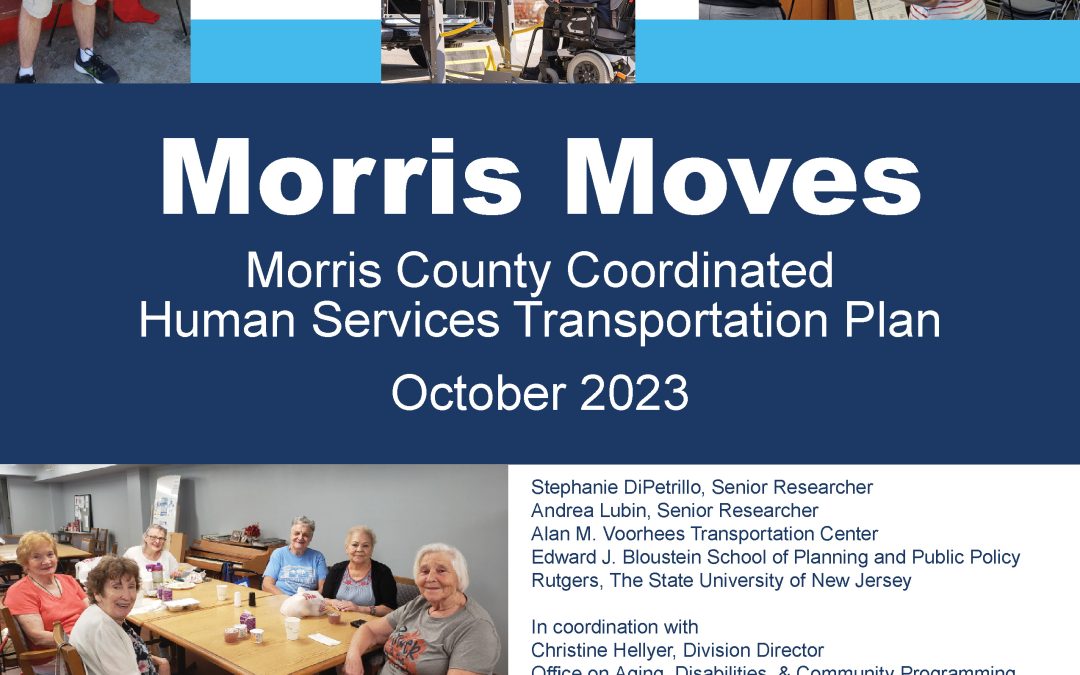
The updated Morris County Coordinated Human Services Transportation Plan (CHSTP) provides an integrated and collaborative framework for providing human services transportation in Morris County, New Jersey.
This planning study sought to investigate the feasibility of microtransit as a cost-effective means to meet demand for more seamless, inter-county trips among New Jersey’s county community transit customers. For the purposes of this study, the definition used for microtransit has been small scale, on‐demand, dynamic-route, shared transit services such as shared ride taxis and other non-fixed route operations.
The research presented in this paper identified promising practices used by those entities that had completed their projects (and had successfully achieved their goals) despite difficulties along the way.
The question addressed here is how, if at all, TOD and TOD-proximate residents’ perceptions of the benefits and shortcomings of TOD are perceived and addressed by professionals involved with TOD planning and development.
This research study explores, through case study work, efforts that have been effective in improving pathways to transit for persons with disabilities.
This study provides an overview of the beneficial impacts of transit-oriented development – compact, mixed-use pedestrian land uses within walking distance of transit stations.
Transportation researchers rarely publish findings from qualitative methods in peer-reviewed transportation journals; quantitative methods dominate research in the field. In this article, we document the paucity of qualitative research in transportation journals and...
Virtual public involvement (VPI), defined by the Federal Highway Administration as “the use of digital technology to engage individuals or to visualize projects or plans,” is now an essential part of public participation in transportation planning and project...
We report on an analysis of carbon emissions from commuting to a large multi-campus university system, Rutgers, the State University of New Jersey. This is derived from a campus survey to assess carbon emissions and various attitudes towards sustainability across a...
Women and sexual and gender minorities (SGMs) have unique transportation experiences and needs, including public transit services. However, there is a gap in the data that documents their experiences and needs. This paper aims to add to existing research by examining...