The analysis presented here evaluates the median property valuations surrounding eight transit stations with TOD using residential property valuation data provided by Zillow™, an on-line real estate listing firm.
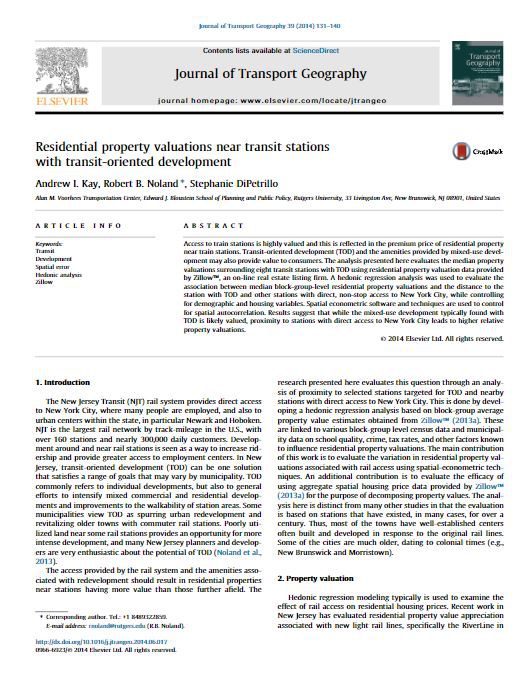


The analysis presented here evaluates the median property valuations surrounding eight transit stations with TOD using residential property valuation data provided by Zillow™, an on-line real estate listing firm.
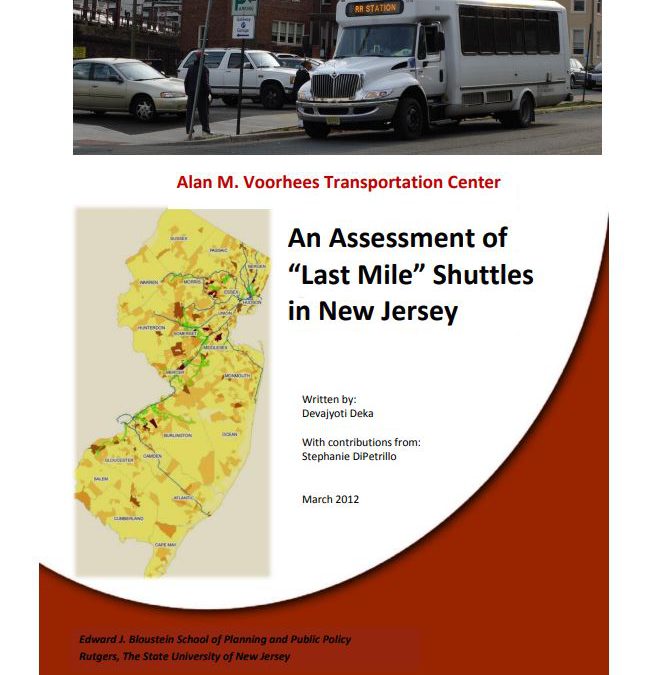
The primary objective of this research was to assess the “Last Mile” shuttles in New Jersey.
Econometric analysis of the change in average residential sales price over 9 years finds an association but cannot establish a causal effect.
This report documents the economic impacts of the RiverLINE, a light rail line connecting Trenton and Camden, New Jersey.
Foreign-born residents of New Jersey account for a fifth of its population but almost 40 percent of its transit commuters and all growth in transit commuting since 1980.
Most locations across the world have a large un-tapped pool of people who do not bike at all and an even larger pool who do not bike for transportation. To increase cycling, we must better understand this group and the reasons they do not ride. I propose a new theory...
Though data on fatal crashes are available through the Fatality Analysis Reporting System (FARS) and are readily available to the public, many states do not make their crash data (including injuries) easily accessible for the public and the research community. The...
Trail networks enhance community well-being, providing accessible options for walking, biking, and rolling while promoting sustainability and economic vitality. In New Jersey, investing in trails and shared-use paths supports mobility, safety, and environmental goals,...
From labor-saving inspection drones to safety-enhancing techniques for bridge repair and preservation, a multipronged New Jersey Department of Transportation technology transfer initiative is helping to advance innovation throughout the agency and state. The goal:...